
How Insurance Really Decides
After a storm, homeowners are often told one of two things.
“It’s wind damage.”
Or
“That’s just wear and tear.”
Those two phrases sound simple.
But the difference between them can mean tens of thousands of dollars.
At Branded E Construction, we see legitimate storm damage denied every year because the distinction was misunderstood or poorly documented.
Here is how insurance actually looks at wind damage versus wear and tear and why the difference matters so much.
What Insurance Considers Wind Damage
Wind damage is sudden and accidental.
That matters.
Insurance policies are designed to cover events that happen abruptly and cause damage at a specific point in time.
Common indicators of wind damage include:
- Creased or lifted shingles
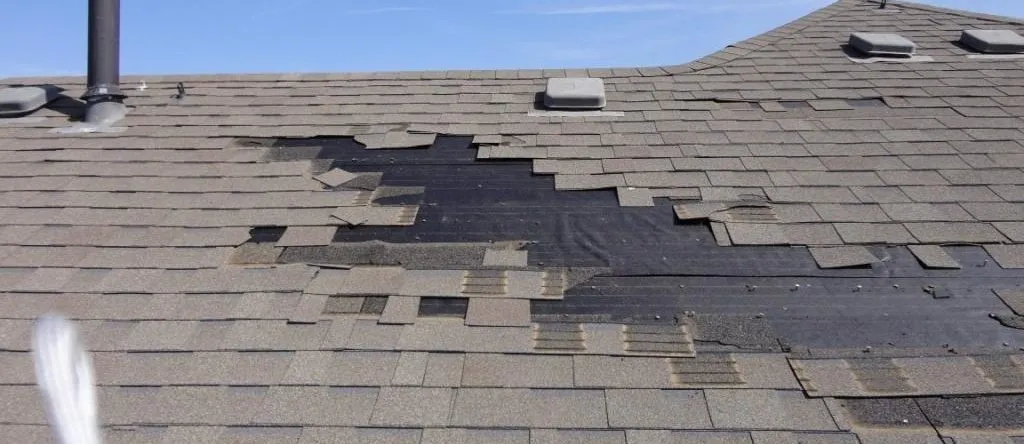
- Missing shingles or tabs
- Broken seals from uplift
- Directional damage patterns
- Collateral impact consistent with a wind event
Wind does not have to remove shingles to cause damage.
It only needs to break the seal or compromise the integrity of the system.
Once that happens, the roof is vulnerable even if it looks intact from the ground.
What Insurance Considers Wear and Tear
Wear and tear is gradual.
It happens slowly over time due to age, sun exposure, temperature changes, and lack of maintenance.
Common signs insurance labels as wear and tear include:
- Brittle shingles
- Uniform granule loss
- Thermal cracking
- Nail pops
- Long term sealant failure
Wear and tear is not covered.
And this is where many claims fall apart.
If storm related damage is mixed with aging indicators and not clearly separated, insurance will often default to wear and tear.
Why Direction and Pattern Matter
One of the biggest differences between wind damage and wear and tear is pattern.
Wind damage typically shows:
- Damage aligned in a consistent direction
- Concentration on specific slopes
- Correlation with known storm events
Wear and tear appears random, uniform, and widespread across the entire roof.
If an inspection does not document directionality and slope specific impact, the claim becomes much harder to defend.
The Role of the Attic
Wind damage does not always announce itself on the surface.
Inside the attic, we often find:
- Daylight through lifted decking seams
- Displaced insulation from air movement
- Water intrusion paths that do not align with visible shingle damage
The attic often confirms what the roof alone cannot.
Skipping it leaves critical evidence undiscovered.
Why Timing Changes Everything
Wind damage becomes harder to prove with time.
Repairs. Foot traffic. Heat. UV exposure.
All of it blurs the line between storm damage and aging.
The longer a roof sits after a storm, the easier it becomes for damage to be labeled wear and tear.
Early documentation is not just helpful.
It is often decisive.
Why Many Inspections Fail This Test
Many inspections are designed to be fast.
They look for missing shingles.
They take a few photos.
They move on.
They are not designed to answer:
- Was this damage sudden or gradual
- Does it match a known storm
- Is there directional consistency
- Is the system compromised even if it looks intact
Without answering those questions, insurance has no reason to approve coverage.
The Forensic Difference
At Branded E Construction, we do not guess.
We document slope by slope.
We analyze patterns.
We correlate damage with weather data.
We examine the attic.
Our goal is not to label damage.
It is to understand it.
Because insurance decisions are based on evidence, not opinions.
Why This Matters to Homeowners
When storm damage is mislabeled as wear and tear, homeowners pay out of pocket for something insurance may have covered.
Once a claim is closed, correcting that mistake is extremely difficult.
Understanding the difference early protects you from that risk.
At Branded E Construction, it matters who you choose®.
We deliver peace in the midst of the storm.